
The globes and their history
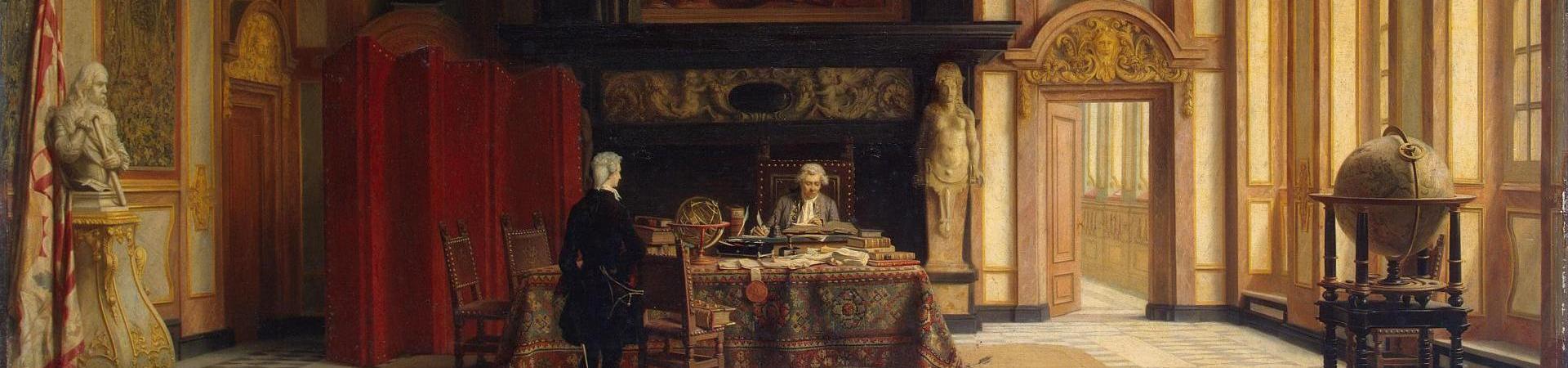
In 1595, Willem Jansz. Blaeu (1571-1638), child of a wealthy family of herring traders, embarked on a study trip to Denmark. He entered an apprenticeship with the famous astronomer Tycho Brahe, where he was able to give free rein to his interest in mathematics and astronomy and was taught to construct instruments, conduct astronomical observations, and print books. After his return to the Netherlands, Blaeu established residence in Amsterdam, the ideal location for a producer of navigational instruments and maps. It is in Amsterdam that Blaeu’s first influential book was published in 1608: ‘Het licht der zeevaart, een handleiding voor het navigeren op zee’ – (The light of navigation, a navigation manual for mariners).
Blaeu achieved his greatest successes with his atlases and globes. In 1616, he produced two globes with a diameter of 68 centimetres, the largest then in existence. These globes would remain the largest available on the market for seventy years to come. Globes of this size were especially aimed at rich collectors and scientists. Actually, they were regarded more as status symbols rather than scientific instruments. In the meantime, Willem Blaeu continued to improve his globes, incorporating the most recent discoveries.
In 1638, following Willem’s death, his son Joan took over the firm. He continued to produce globes, maintaining existing production levels: of the 68-centimetre globes, 102 terrestrial and 97 celestial ones are still in existence today, the large majority printed during the times of Joan Blaeu. This includes the globes now held in the Heritage Library collection.
Then, in January 1836, Baron de Pret de Terveken, mayor of Hemiksem and a well-known Maecenas, donated a celestial and a terrestrial globe to the City of Antwerp.
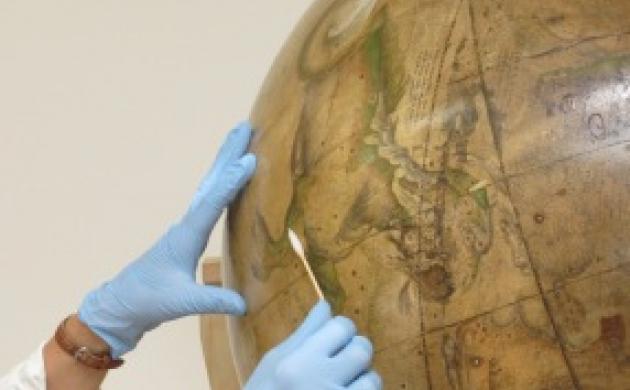
This is how the globes found a home in the City Library, which at that time was still located on the second floor in the Town Hall. Almost two centuries later, the globes were in dire need of a rejuvenation. The globes were restored with the support of the King Baudouin Foundation and BASF Antwerp. In September 2013, the restored globes returned to their familiar location in the Nottebohm Room.
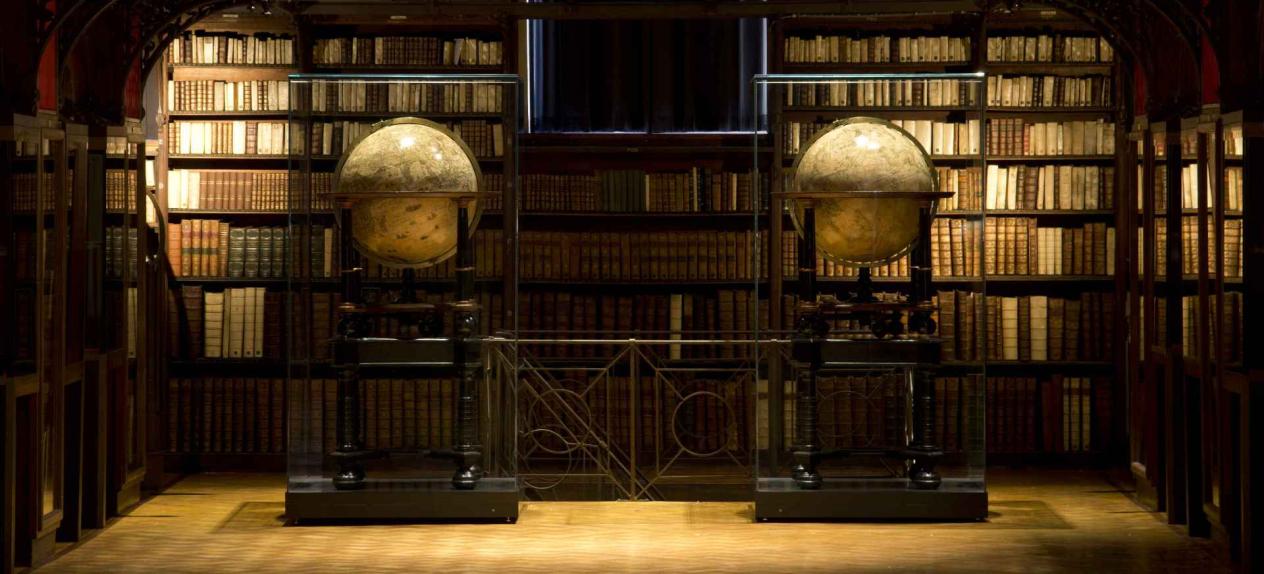 Foto: Erfgoedbibliotheek Hendrik Conscience
The globes' features
The terrestrial globe
The terrestrial globe dates back to 1645-1648. It incorporates additions by Joan Blaeu. New discoveries in Australia were added into this edition, based on travel reports of the Dutch discoverer, Abel Tasman.
The celestial globe
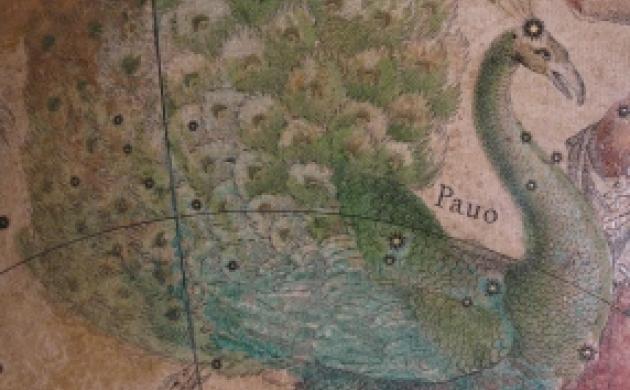
The positions of the stars marked on the celestial globe are mostly those recorded by Tycho Brahe. These observations, of the highest accuracy possible at the time, were subsequently complemented with 300 positions of the southern constellations, as measured by Frederik Houtman.
Discover the globes virtually
Our online exhibition discusses their history, their maker, their relevance and their restoration. It examines the restoration process and also zooms in on the history of these globes. Who was Willem Blaeu? Why were globes so important in the seventeenth century? And why are these globes so special? And who was Baron de Pret de Terveken, the man who donated the globes?