Newsroom

The Heritage Library is the repository for modern and historical newspapers and periodicals – on paper, on microfilm or in digital form.

About the Nottebohm Room

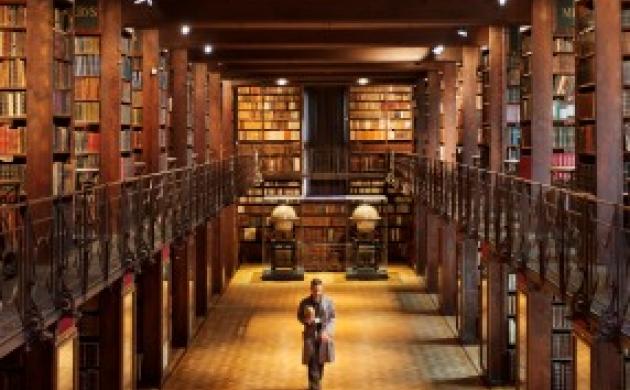
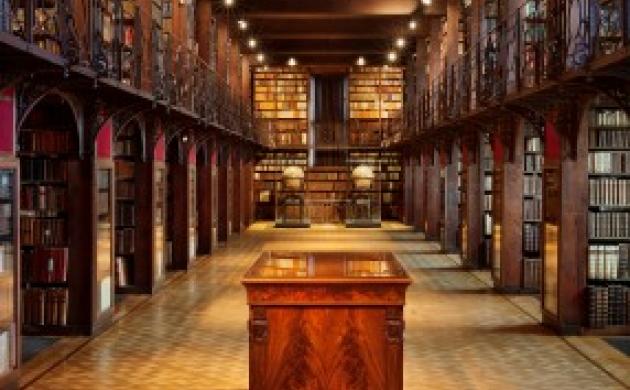
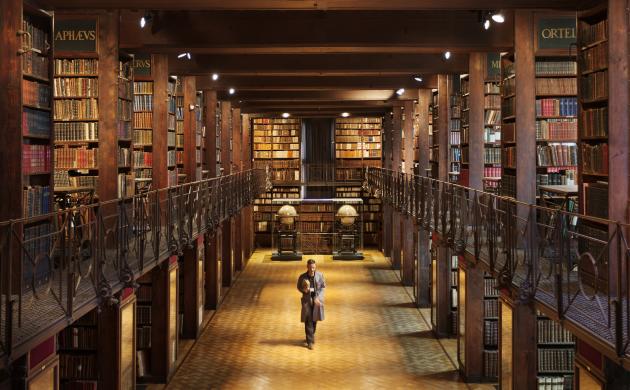
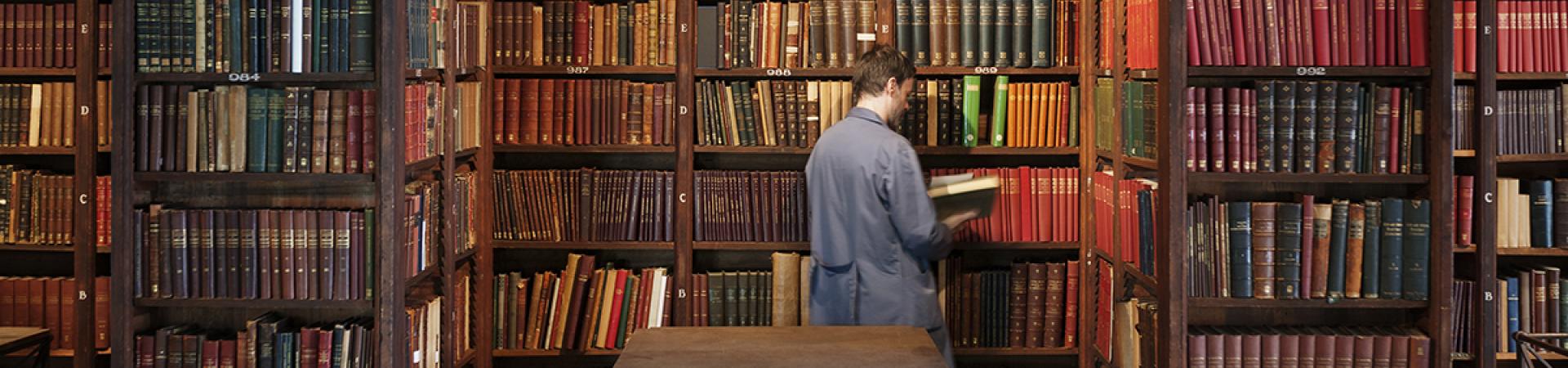
The Nottebohm Room is one of the best-kept secrets in Antwerp. It is located in the oldest part of the library and was originally built in 1936 as a ceremonial room. Besides being a book repository and exhibition gallery, it is also used to preserve special donations and collection items. It owes its name to an Antwerp patron of the arts, called Oscar Nottebohm.

The Nottebohm Room

The Nottebohm Room is a hidden gem. The first 150,000 items in the library’s catalogue are preserved here in a breath-taking, historical setting. The doors only swing open for exhibitions, lectures, concerts or guided tours. And when they do, it’s like a breath of magic.
The Nottebohm Room

The Nottebohm Room is a hidden gem. The first 150,000 items in the library’s catalogue are preserved here in a breath-taking, historical setting. The doors only swing open for exhibitions, lectures, concerts or guided tours. And when they do, it’s like a breath of magic.
Priorities

The Hendrik Conscience Heritage Library is the reference library for anyone interested in finding out more about Antwerp, Dutch literature or the Flemish cultural heritage.

Cultural and general history

The Heritage Library collects publications on general history and on the history of art and culture in Flanders and the Low Countries.

The Esperanto collection of the Hendrik Conscience Heritage Library

In 2016, the Hendrik Conscience Library acquired a large part of the library of the Flandra Esperanto-Ligo or Flemish Esperanto League. We’re talking to Esperantist Cyreen Knockaert, who has been cataloguing this collection for us as a volunteer.

Pornography in the library

Interaction between porn and literature in Flanders
Until recently, pornography has mostly been neglected by literary scholars and historians. Academic attention to pornographic texts was confined to a small range of literary authors with a canonical status, such as the notorious libertine author Marquis de Sade. Similarly, librarians were not interested in pornographic publications, which usually circulated in a secondary circuit of junk reading. As a result of this, the mass of these pulp publications, printed on low-quality paper and deemed unworthy of keeping, has vanished through time.

Ulysses to Baedeker

Three centuries of travel advice in pocket size
Gerrit Verhoeven is a postdoctoral fellow at the Department of History of the University of Antwerp. As an urban historian, he specialises in early modern Europe, particularly – but not only – the Low Countries and Western Europe. He has published on travel and tourism, on time awareness and human capital, on the resilience of social relations, and on book history. In this blogpost he writes about the research potential of travel guides kept in the collection of Hendrik Conscience Heritage Library.

"Antwerp is a colonial city"

Historian Bas De Roo has been scouring our collection for books on Belgium’s colonial past for his dissertation on the flow of taxes and customs duties in Congo Free State. After his dissertation, De Roo worked at the University of Leipzig, where he researched the role of the Congolese elite in the governance of the Free State and Belgian Congo. Today, De Roo is a researcher at Geheugen Collectief, which offers historical research in an accessible way to a broad public in the form of exhibitions, historical walks, apps, publications ...